


Services > Device development
Embedded AI development for industrial devices
We help equipment manufacturers develop and integrate on-device AI that performs reliably on production hardware, within real-world memory, power and cost constraints.

- From model to device
- Within hardware constraints
- Alongside your R&D team
Typical starting points
Where we join your embedded AI project
Manufacturers involve us at different points: when developing a new AI-enabled product, bringing an existing model onto target hardware, or supporting intelligence already deployed in the field.
New product
Your next product generation needs on-device intelligence
Adaptive control, intelligent sensing or local decision-making is on the roadmap, and your embedded team needs specialist capacity for model development, optimization and integration on the target device.
Existing model
Your AI model works in the lab, but needs to run on your device
A model from your data-science team or an external partner works in development but struggles with memory, latency, power or runtime integration on target hardware. We take it from working in development to running reliably in production.
Deployed product
Your deployed AI needs lifecycle engineering
Model updates, device updates, verification, secure deployment or performance monitoring are becoming difficult to manage across the installed base. We help maintain, validate and update AI capabilities across the product lifetime.
The engineering work
From model to production device
Bringing AI onto a production device takes more than a working model. Memory, processing power, latency, energy use and hardware cost shape the engineering from the start. Our data scientists and embedded engineers work across model development, optimization, system integration, verification and deployment, with the target device in mind throughout.

1. Model
Data and dataset engineering
- Data capture and acquisition pipeline
- Labeling strategy and dataset governance
Baseline model and evaluation harness
- Model selection and development
- Candidate model evaluation against task requirements and target hardware constraints, including accuracy, memory footprint and inference latency
2. Optimize
Model compression for embedded and edge
- Pruning and distillation, where relevant
- Quantization for supported model and hardware formats
Target runtime and accelerator integration
- Runtime selection and integration
- Hardware acceleration enablement
- Pre- and post-processing on-device
- Scheduling and real-time behavior
3. Validate
System integration
- API design
- Resource arbitration: CPU and memory use
- Edge-to-cloud interface
Verification, validation and test automation
4. Deploy
Security, safety and IP protection
- TrustZone support
- Secure Boot
- Encryption
Deployment, OTA updates and lifecycle management
- Operator and technician support
- Rollback, updates and signing
- Model and firmware versioning
- Model improvements
Delivered engineering
More intelligence, without more expensive hardware
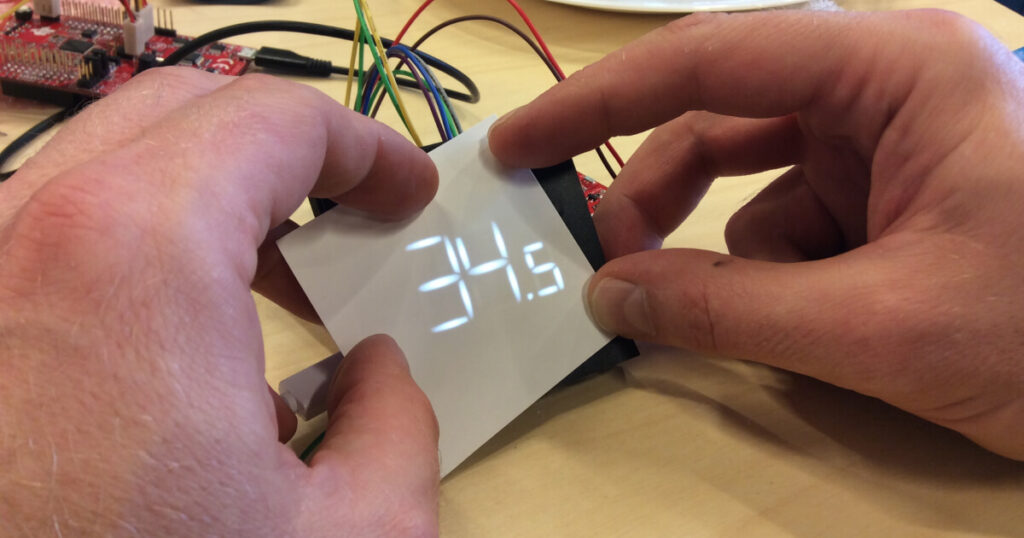
On-device ML for precise temperature estimation and control. For a global electric floor-heating manufacturer, we delivered the model, electronics and embedded software within a fixed bill-of-materials target.
- AI model running locally
- Integrated electronics and software
- Fixed hardware cost target
Applied research
Edge AI for rocket-engine health monitoring
As part of the ArianeGroup-led ENLIGHTEN research consortium, we developed a transformer-autoencoder approach to detect anomalies in rocket-engine sensor data. The work explored fast, on-device fault detection under demanding operating conditions.
The approach is also relevant to industrial condition monitoring, where equipment must identify unusual behavior from sensor data.

Space robotics R&D
AI localization under tight hardware constraints
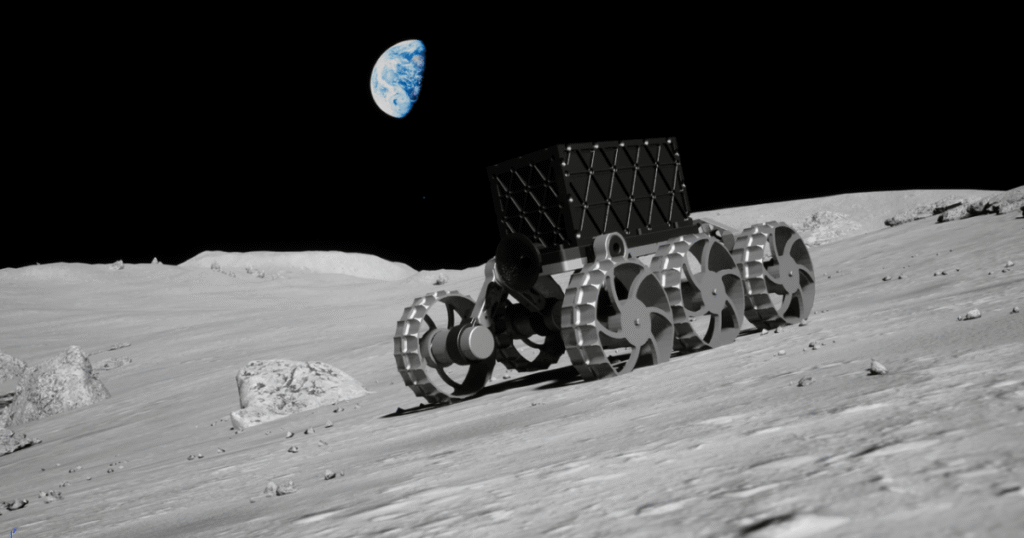
We developed a framework for AI-based localization (SLAM) pipelines for a lunar rover, designed around the limited computing power and energy available on the device. The work used simulated lunar landscapes and physical rover data to develop and test the pipelines.
Developed with Tartu Observatory and KuupKulgur in an ESA-supported project, this work demonstrates our experience with an engineering challenge shared by industrial edge AI: making sophisticated AI functionality work within a device’s hardware and power budget.
Image © KuupKulgur
Research and development, not commercial production.
Delivery model
Working alongside your R&D team
We take responsibility for the part of the development your team needs support with: the full model-to-device chain, the hardware-aware optimization and integration, or lifecycle work on an existing deployed model. Boundaries, ownership and interfaces are agreed with your team.
Start with your product and constraints
Existing model or none, device hardware, product goals, scope and division of responsibilities: we agree these up front with your product, engineering and data-science leads.
Develop and integrate with your R&D team
Our data scientists and embedded engineers work alongside yours. Hardware constraints feed back into model decisions, and architectural choices are made with your engineering team, not in isolation.
Verify against production requirements
We verify the agreed functionality against performance, resource and reliability requirements on target hardware. We document the delivered integration and verification results so your team can maintain and update the solution.
Support the intelligence throughout the lifecycle
Model updates, device software evolution, ongoing verification where required. Not a default, a choice.
Technologies
Tools and target hardware
Tools, frameworks and target hardware we work with for Edge AI engagements.
Model development
PyTorch, TensorFlow
Inference runtimes
LiteRT, ONNX Runtime
Target hardware
Microcontrollers, application processors, edge-computing modules, FPGA-based systems
Security and updates
Secure boot, hardware-backed isolation, secure update mechanisms
Frequently asked
Working with Proekspert on embedded AI
No. We can support development from an initial use case and available data, or work with a model your team has already developed. The scope depends on your product requirements, data and target hardware.
Yes. A model that works in development may still need optimization, hardware integration and verification before it can run reliably on a production device. We assess the existing model and target hardware, address constraints such as memory, latency and power consumption, and engineer the integration, testing and deployment work needed for the agreed product requirements.
That depends on the model and the device’s memory, processing power, latency and energy constraints. We evaluate the target hardware and explore options such as quantization, model compression and runtime optimization. The aim is to make effective use of the existing platform where practical, while identifying hardware limitations early.
Yes. If your data-science team or another partner has already developed a model, we can take on a defined scope covering optimization, runtime integration, hardware acceleration and verification on the target device. We agree the technical interfaces, responsibilities and acceptance criteria with your engineering team.
We verify the agreed AI functionality against system requirements, including inference performance, hardware resource use and reliability. Depending on the engagement, we can also support model and software updates, version management, secure deployment and ongoing verification. Lifecycle responsibilities are agreed as part of the project rather than assumed to be a managed service.
Get in touch
Discuss your embedded AI project
Tell us where your project is now: a use case, a working model, a product in development, or a device already in the field. You don't need a fully defined scope; we'll help identify a sensible next step.

Jukka Antero Halttunen
Embedded Software and Systems Lead
Languages: EST, ENG, FIN